From paradigms to the study matrix — a practical journey for design researchers
www.jaimeriveraphd.com
A paradigm is a system of fundamental beliefs that guides how we understand reality, how we generate knowledge, and how we investigate it.
Each paradigm answers three different questions:
What is the nature of reality?
Does an objective reality exist or is it socially constructed?
What is the relationship between the researcher and what is researched?
Can reality be known objectively?
How should we investigate?
What methods are appropriate for generating knowledge?
Ontology: Naive realism — reality exists and is apprehensible as it is
Epistemology: Dualist and objectivist — the researcher does not influence what is researched
Methodology: Experimental and manipulative — hypotheses verified as facts
Typical question: What is the measurable effect of X on Y?
...
...
...
...
Ontology: Naive realism
Epistemology: Dualist/objectivist
Methodology: Experimental
Ontology: Critical realism — reality exists but is imperfectly apprehensible
Epistemology: Modified objectivist — results are probably true
Methodology: Quasi-experimental, triangulation, falsification
Typical question: How likely is it that X causes Y?
...
...
...
Ontology: Naive realism
Epistemology: Dualist/objectivist
Methodology: Experimental
Ontology: Critical realism
Epistemology: Modified objectivist
Methodology: Triangulation
Ontology: Historical realism — reality is shaped by power, history, culture, economy, and gender
Epistemology: Transactional/subjectivist — the researcher's values influence the inquiry
Methodology: Dialectical — discourse analysis, ideological critique
Typical question: Who benefits? What is hidden?
...
...
Ontology: Naive realism
Ontology: Critical realism
Ontology: Historical realism
Ontology: Relativism — multiple, socially constructed realities
Epistemology: Transactional/subjectivist — researcher and participant co-construct meaning
Methodology: Hermeneutic/dialectical — ethnography, grounded theory, phenomenology
Typical question: How do participants experience X?
...
Ontology: Naive realism
Ontology: Critical realism
Ontology: Historical realism
Ontology: Relativism
Ontology: Participatory reality — subjective-objective, co-created between mind and cosmos
Epistemology: Extended — experiential, presentational, propositional, and practical
Methodology: Cooperative — all are co-researchers and co-subjects
Typical question: How can we transform X together?
Design research frequently operates across paradigms. A project may use constructivist ethnography to understand context, post-positivist experimentation to test a solution, and participatory design to co-create with communities.
The key is not choosing one paradigm and staying there — it's being aware of when and why you shift from one to another.
A Structured Process to Design New Information Technologies · IIT Institute of Design · 2023
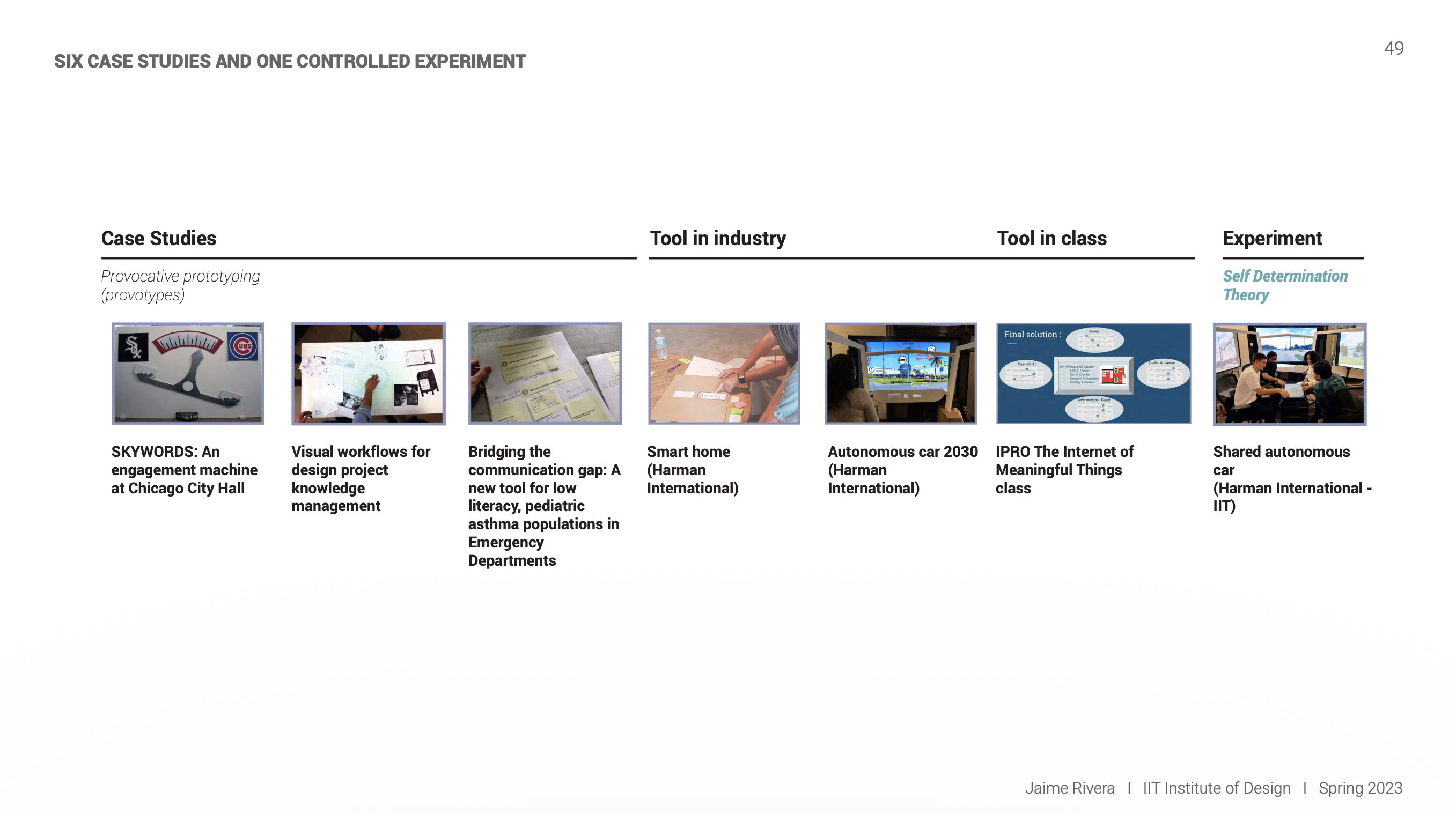
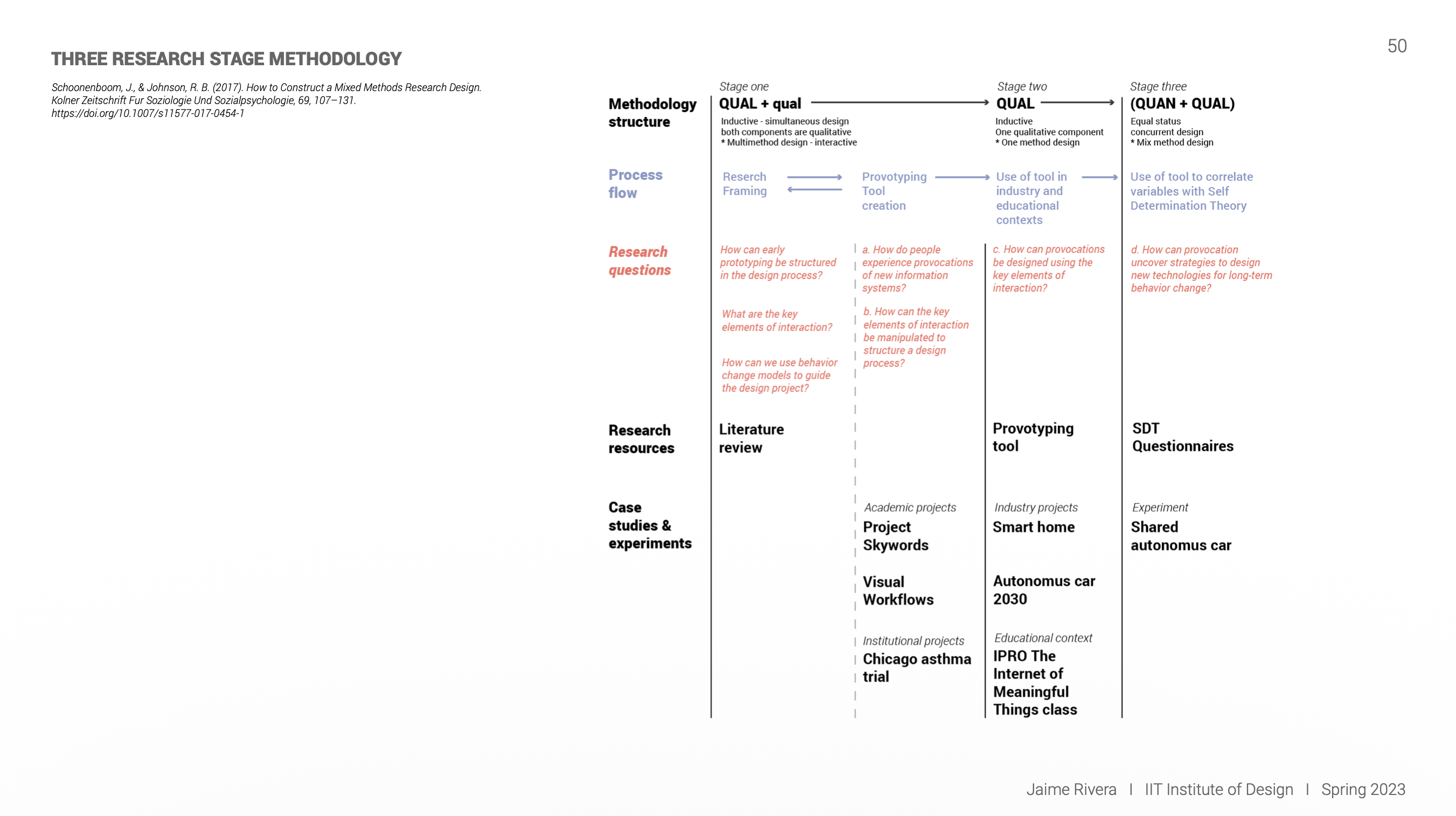
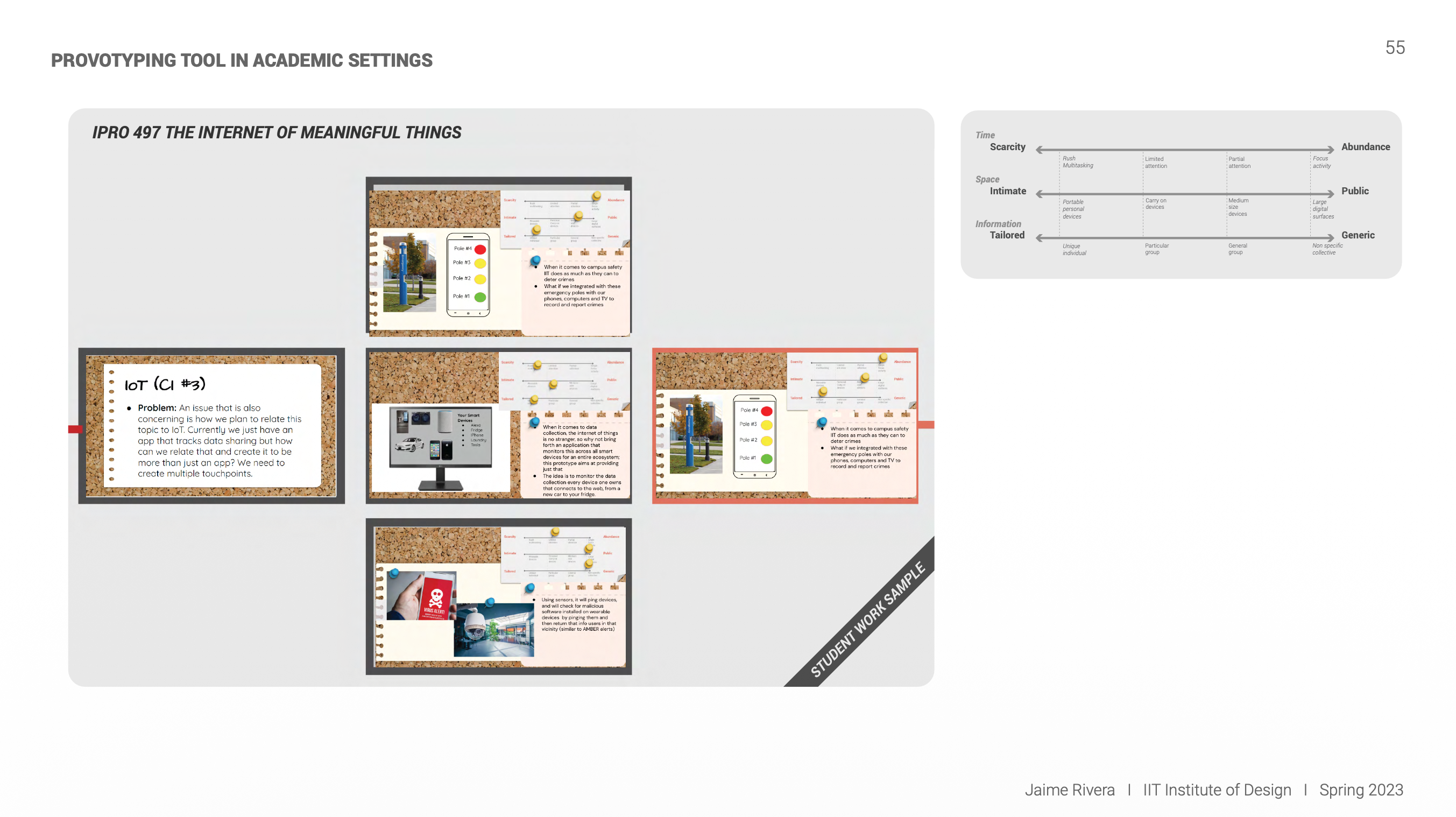
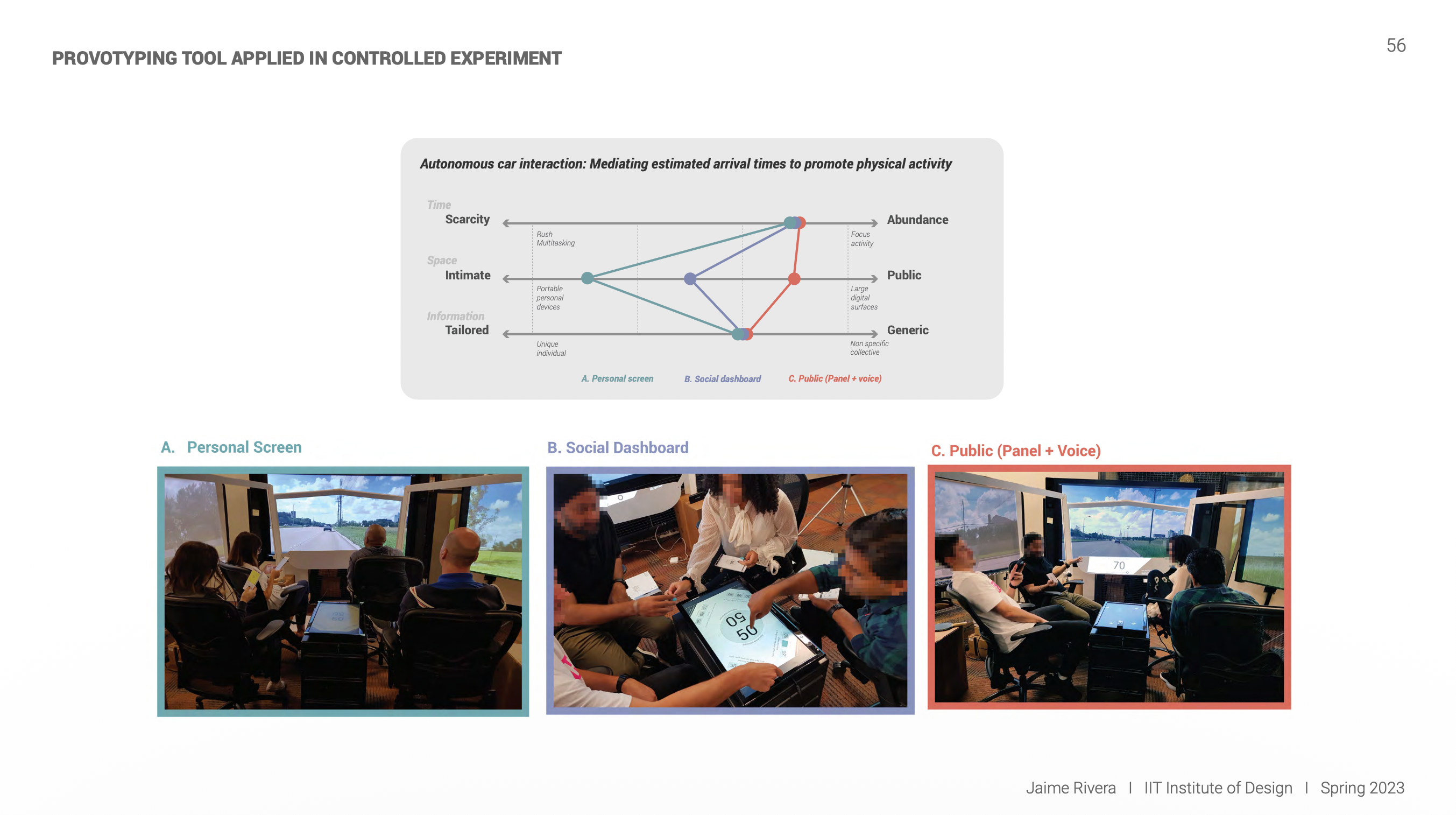
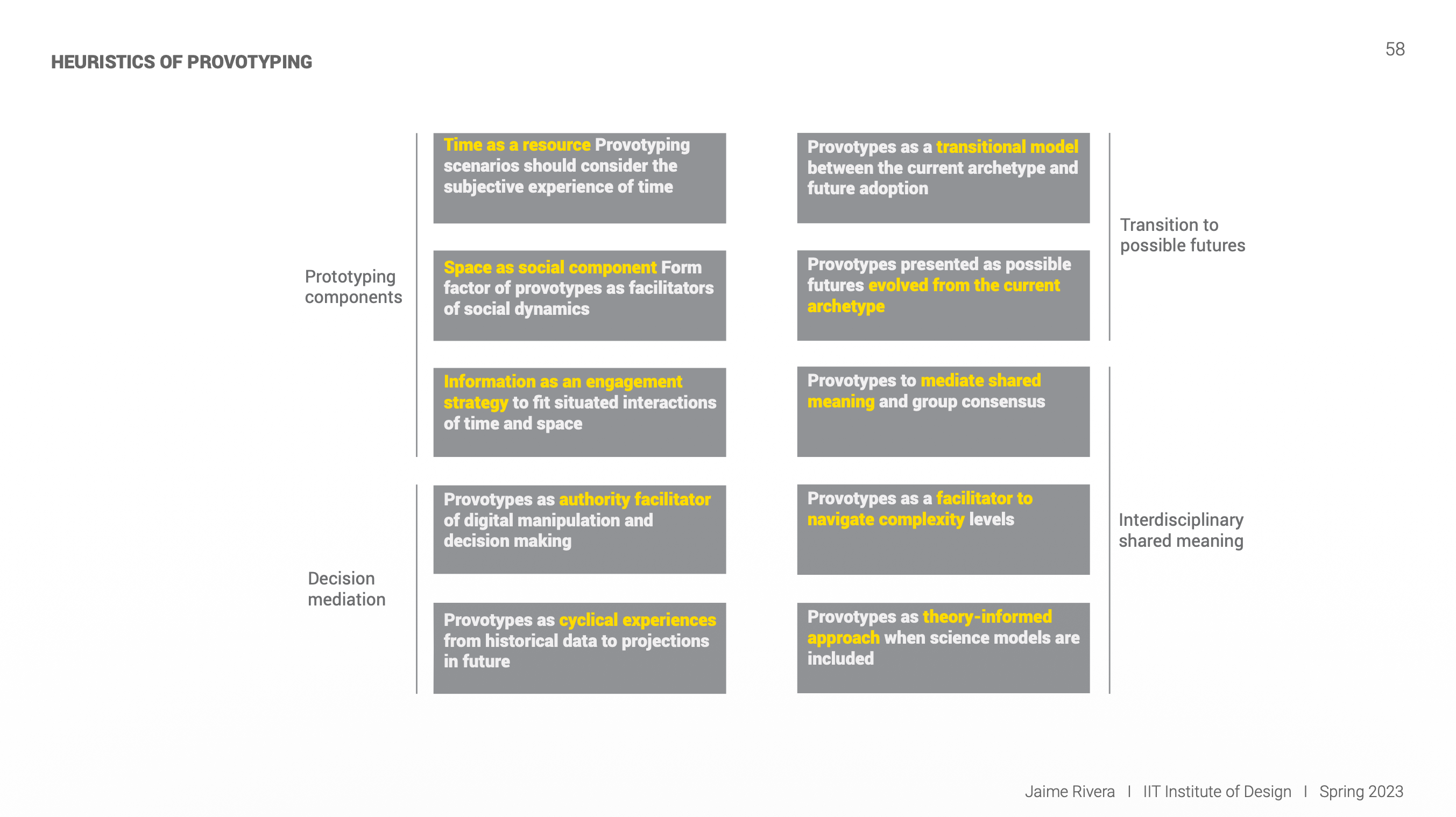
3 case studies with provocative prototyping (provotypes).
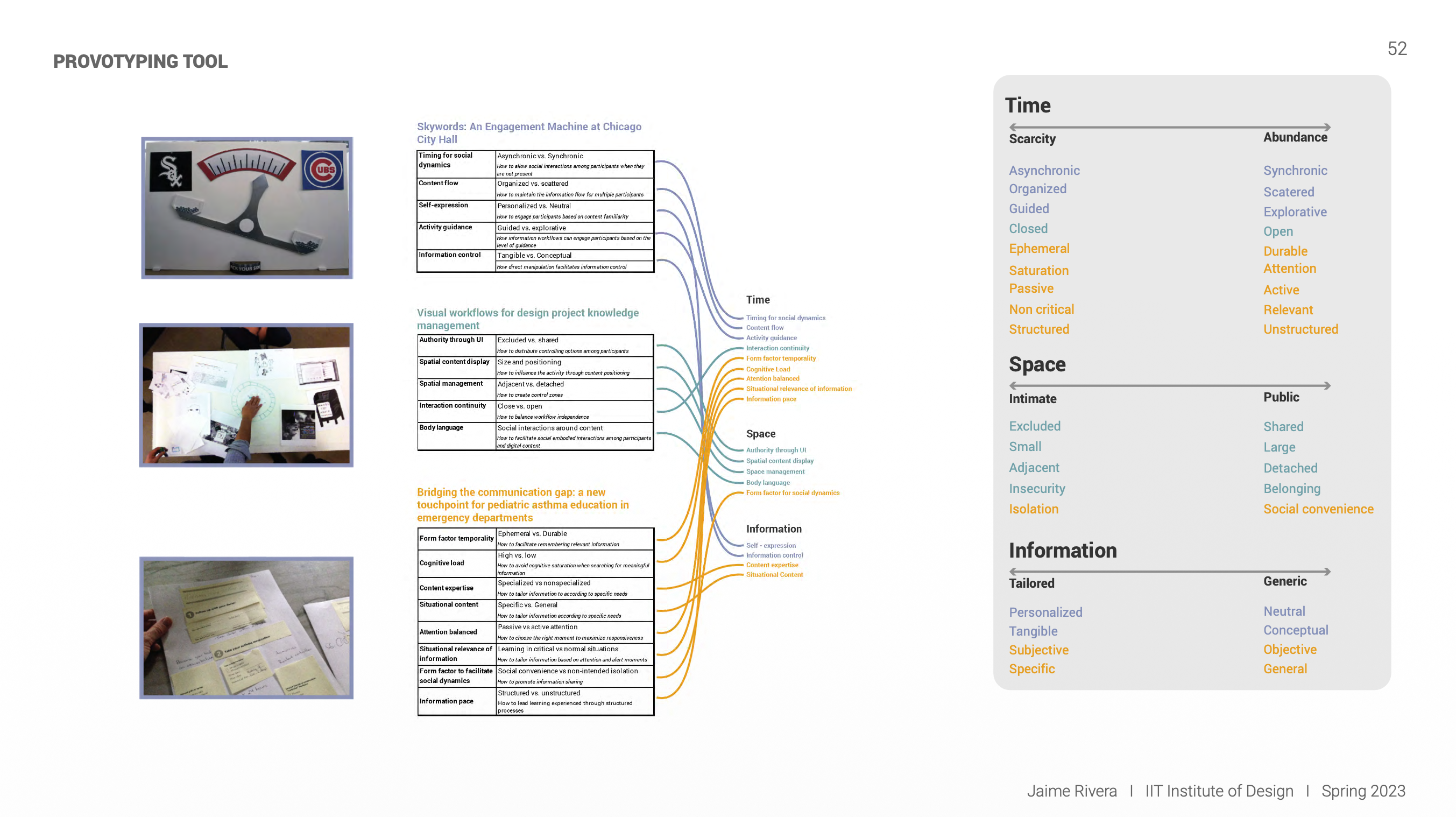
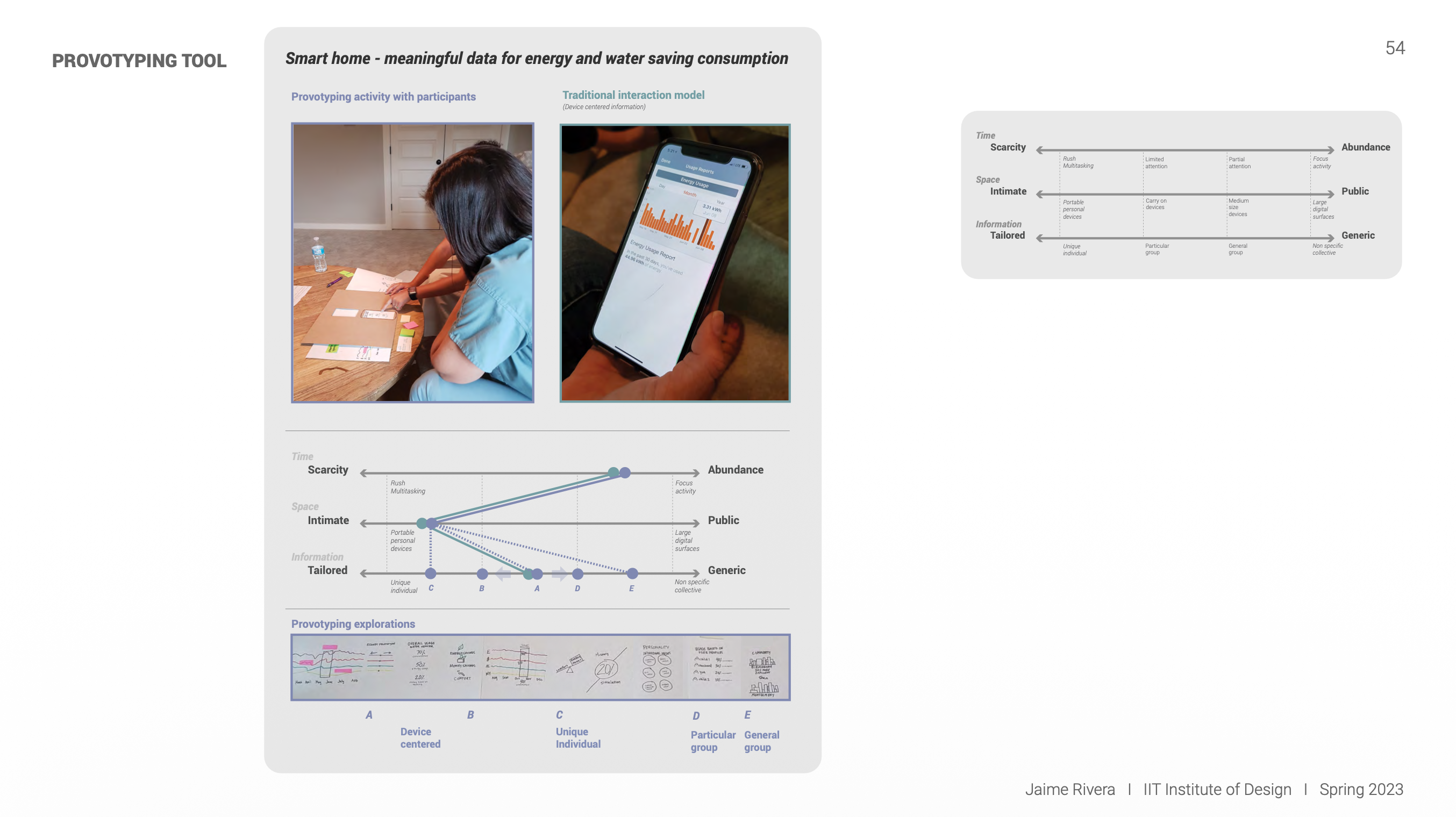
Provotyping tool applied in industry (Harman/Samsung).
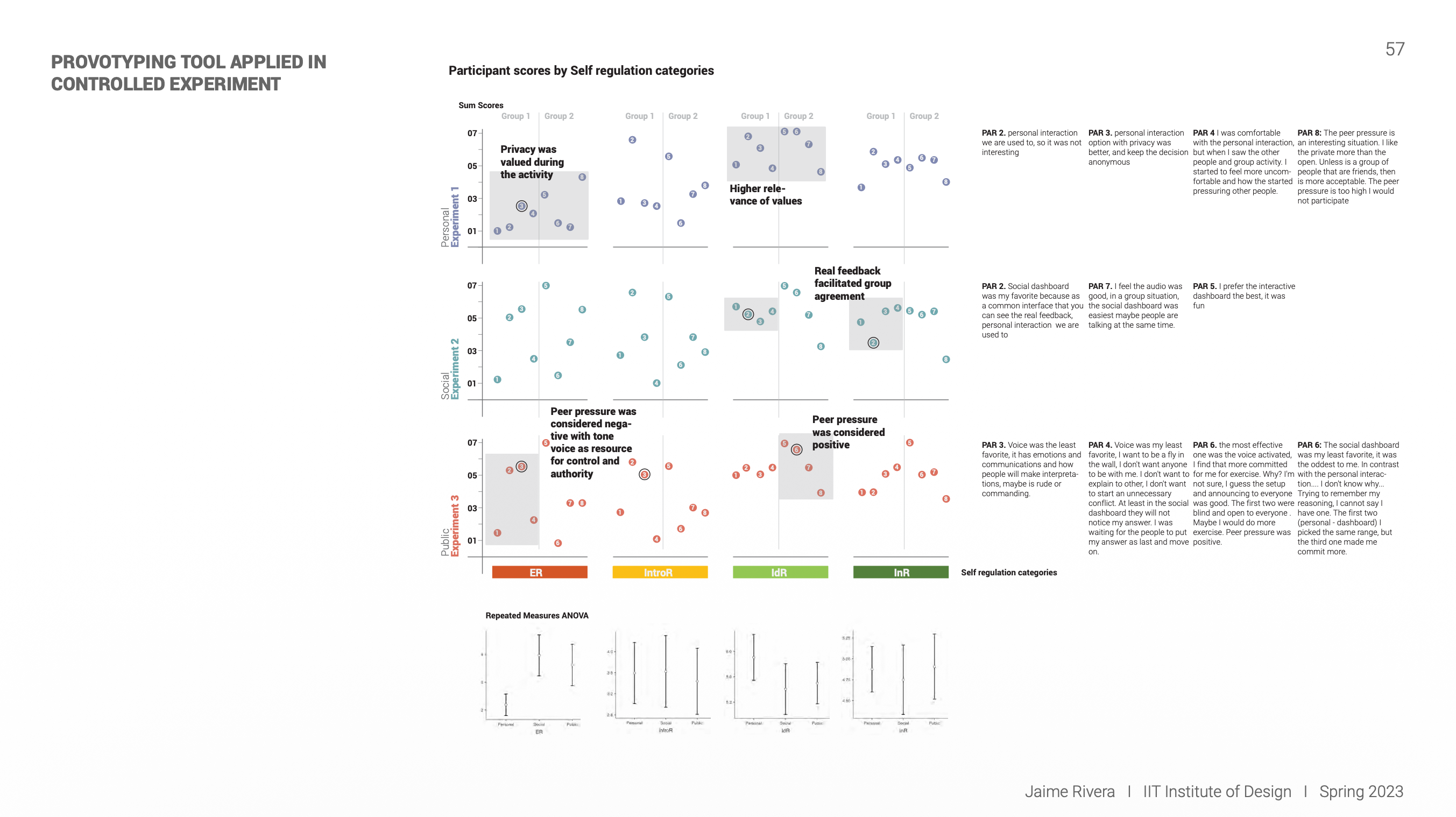
Controlled experiment. Repeated Measures ANOVA + interviews.
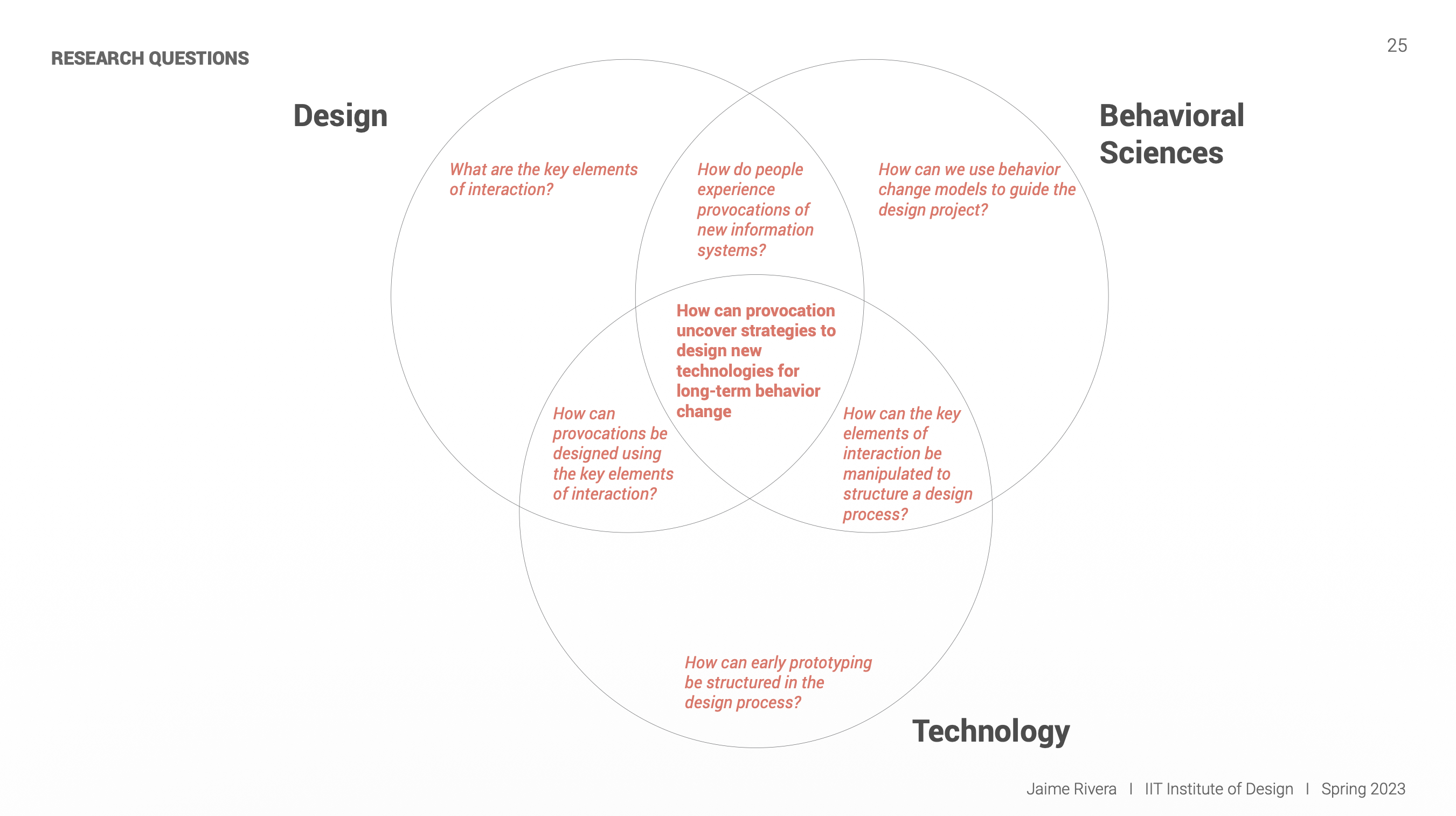
Each field contributed a foundational question. The central question emerges from the intersection of all three.
METHODOLOGICAL INSIGHT
The best research questions emerge at the intersections between fields.
How can early prototyping be structured in the design process?
How can behavior change models guide the design project?
What are the key interaction elements for new technologies?
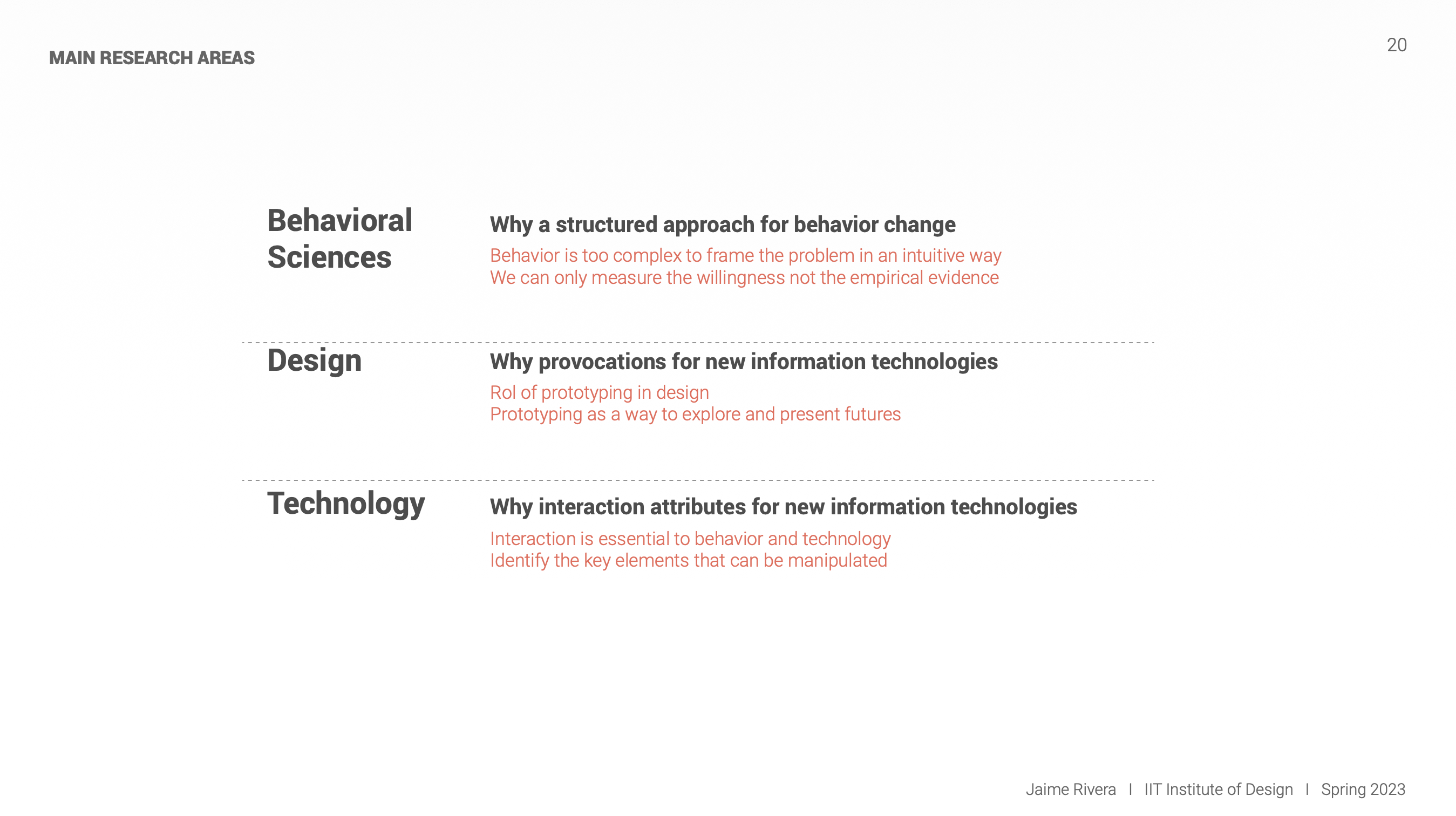
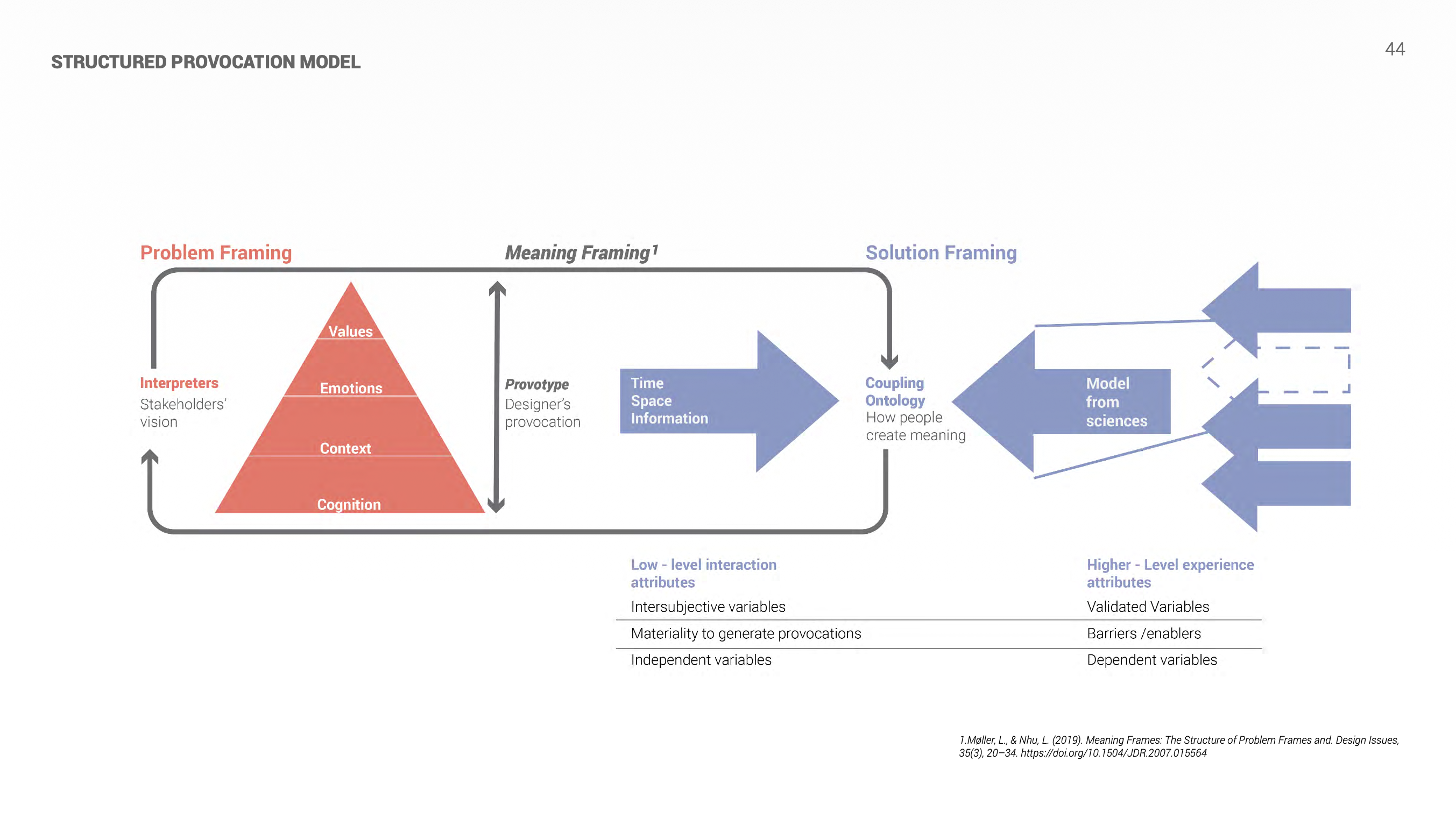
How can key interaction elements be manipulated to structure a design process based on provocations?
My dissertation operates across three different paradigms over three stages. This is not a mistake — it's a conscious methodological decision.
Rigor is not about staying in one paradigm — it's about knowing when and why you shift.
Provotypes to understand interactions in context
Tool validated in real industry
Controlled experiment with ANOVA
Mixed methods ≠ "doing both"
Mixed methods = articulating paradigms with intention
Before building your study matrix, we need to deactivate some beliefs that block design researchers.
RtD is structured research. The design artifact is not the final result — it's the vehicle through which new understanding is generated.
Structure comes from rigorous documentation of the process, design criteria, and systematic reflection.
A project solves a specific problem for a client. Research generates transferable knowledge to other contexts.
Solves a specific problem.
Result: artifact, service, or system.
Generates transferable knowledge.
Result: new, documented understanding.
Design does have unique characteristics (wicked problems, abduction, reflexive praxis), but it shares methodological foundations with the social sciences.
We don't need to reinvent the wheel — we need to adapt it with awareness of our particularities.
Qualitative rigor exists — it's called trustworthiness: credibility, transferability, dependability, confirmability.
These are the equivalents of internal validity, external validity, reliability, and objectivity.
Tip for your thesis: Use member checking, audit trail, and triangulation to demonstrate rigor.
Mixed methods requires a paradigmatic justification for integration. Having quantitative and qualitative data isn't enough — you must explain how and why they integrate.
Tip for your thesis: Define the sequence (concurrent, sequential), the weight (QUAL→quan), and the integration point.
A tool to align all components of your research into a coherent system.
The question everything must answer:
Are all components aligned with each other?
Open the interactive Study Design Matrix and build yours.
The template has presentation mode — use it when it's your turn to present.